Amaduzzi on Anacreon
AMADUZZI, Giovanni Cristoforo.
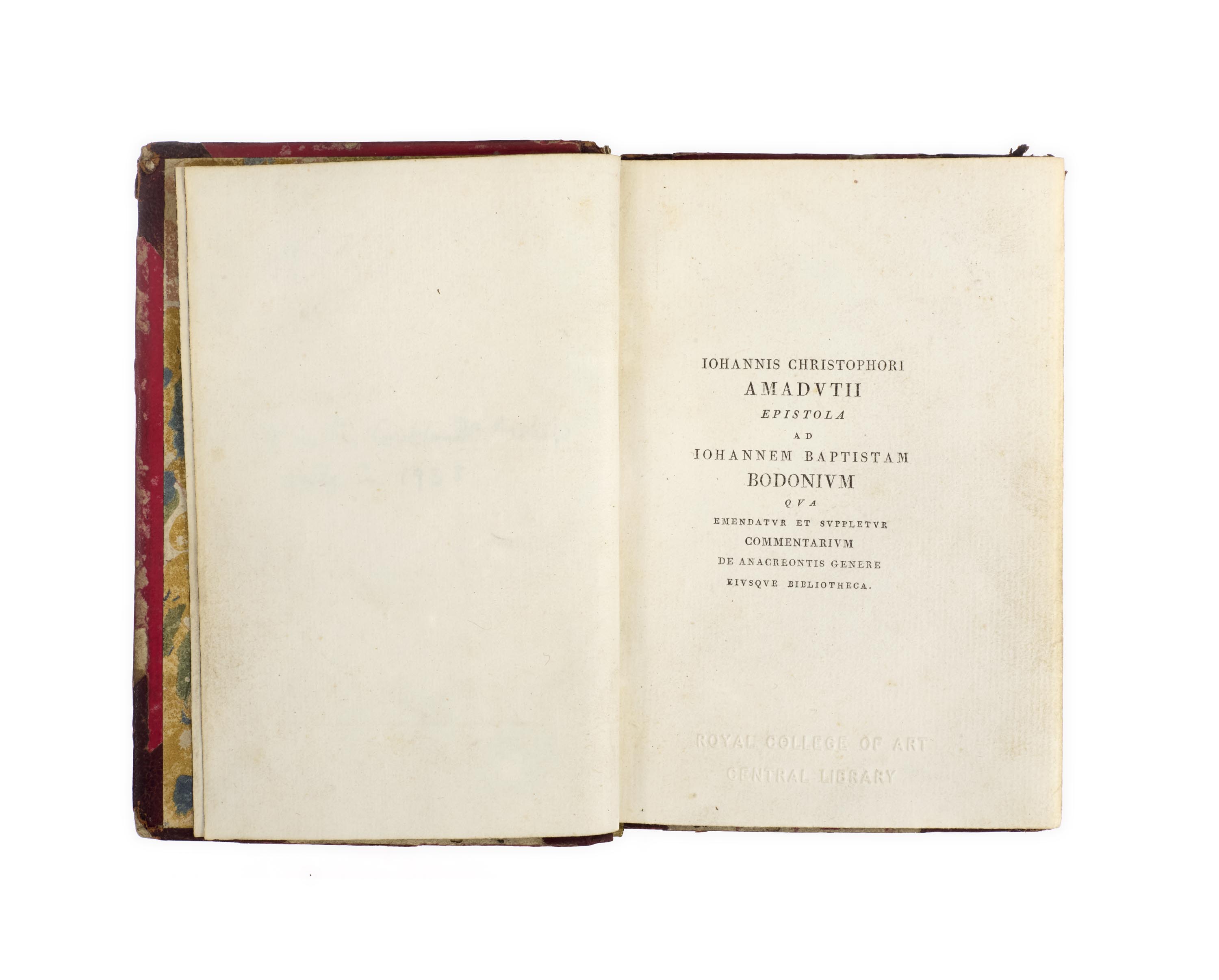
Epistola ad Johannem Baptistam Bodonium qua emendatur et suppletur commentarium de Anacreontis genere ejusque bibliotheca. [(Colophon:) Parma, Bodoni, 1791.]
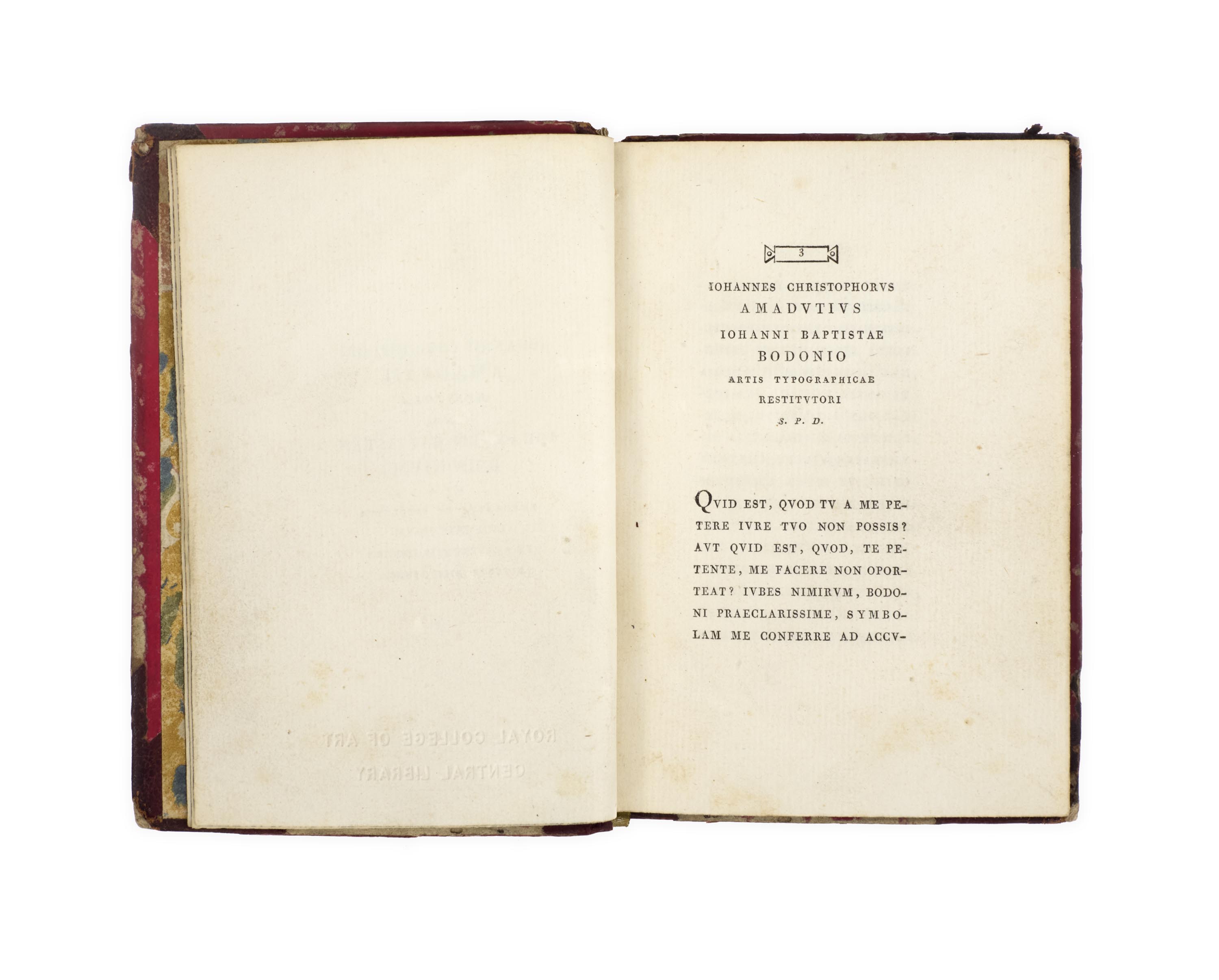
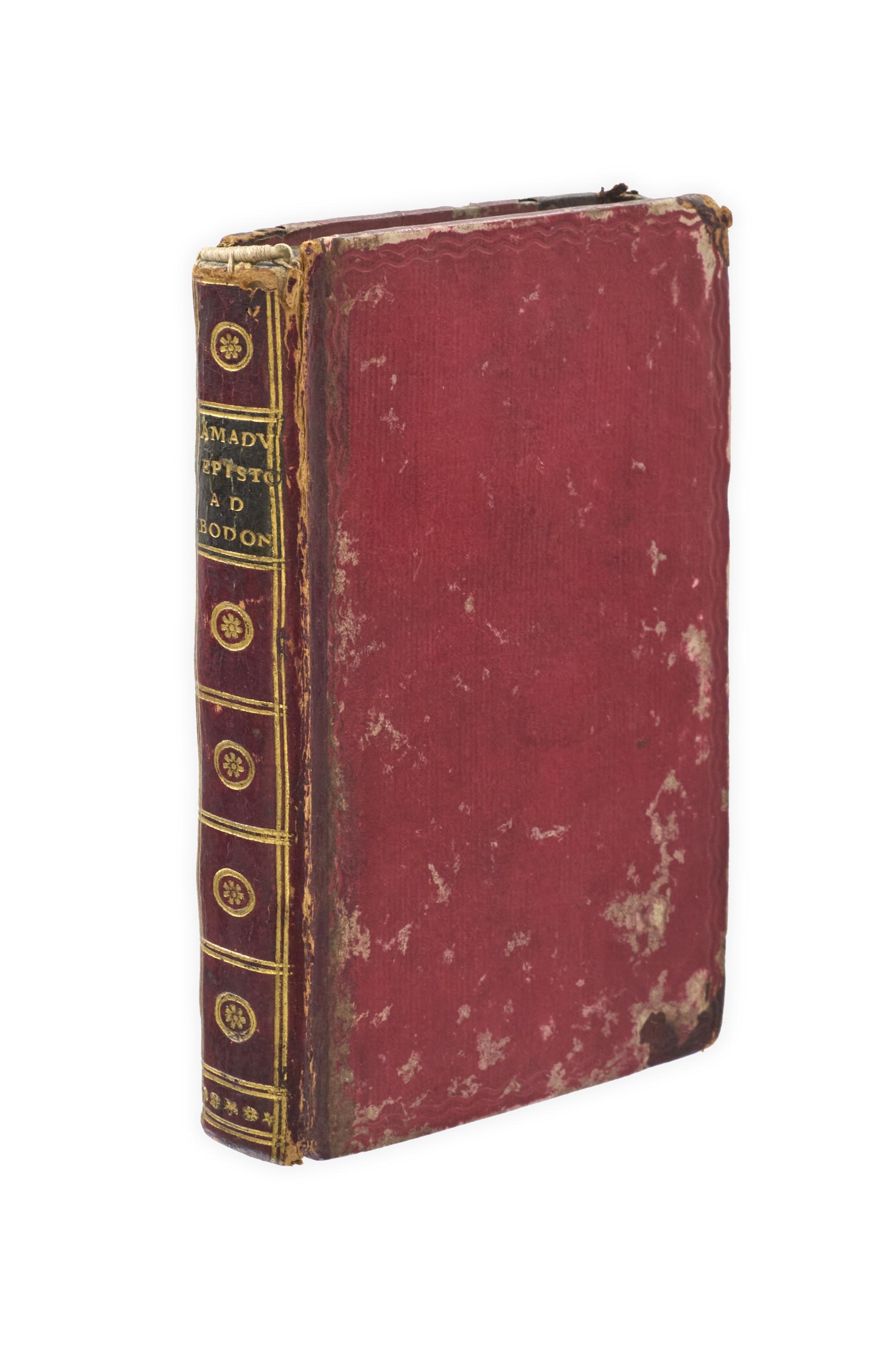
16mo in 4s, pp. 89, [1], [1 (blank)]; a very good copy, bound in contemporary red half morocco with red paper sides, spine gilt in compartments with gilt black morocco lettering-piece, edges speckled blue, marbled endpapers, yellow ribbon placemarker; rather worn, headcap chipped, corners bumped; armorial bookplate of Charles Edmund Merrill junior (1877–1942), gilt red morocco book label of Cortlandt Bishop, and subsequent bookplate of the Royal College of Art to front pastedown, with its blind stamp to title and lending card to rear free endpaper.
Added to your basket:
Epistola ad Johannem Baptistam Bodonium qua emendatur et suppletur commentarium de Anacreontis genere ejusque bibliotheca.
First edition of Amaduzzi’s philological and bibliographical commentary on Anacreon, addressed to Bodoni, ‘artis typographicae restitutor’ (p. 3).
Born in Savignano di Romagna (now Savignano sul Rubicone), the classicist and philologist Giovanni Cristofo Amaduzzi (1740–1792) began his studies in Rimini before moving to Rome in 1762, where he devoted himself not only to Latin and Greek but also to several Oriental languages. Under the patronage of Clement XIV, he was appointed Professor of Greek at the Archiginnasio della Sapienza in 1769 and supervisor of the printing press of the Propaganda Fide in 1770, in which capacity he oversaw the publication of numerous dictionaries, including in Etruscan, Malay, Tibetan, Burmese, Persian, Geʿez, and Armenian.
Amaduzzi’s commentary on Anacreon was published in the same format as Bodoni’s Anacreon of the same year. Brooks notes that, despite De Lama’s claim that it sold out quickly, it is still listed among the books available from Bodoni’s widow in her catalogues of 1820 and 1830.
Provenance:
From the library of the pioneer aviator and book collector Cortlandt Field Bishop (1870–1935); his first sale, American Art Association–Anderson Galleries, New York, 5 April 1938, lot 90.
Brooks 423; De Lama II, p. 66.