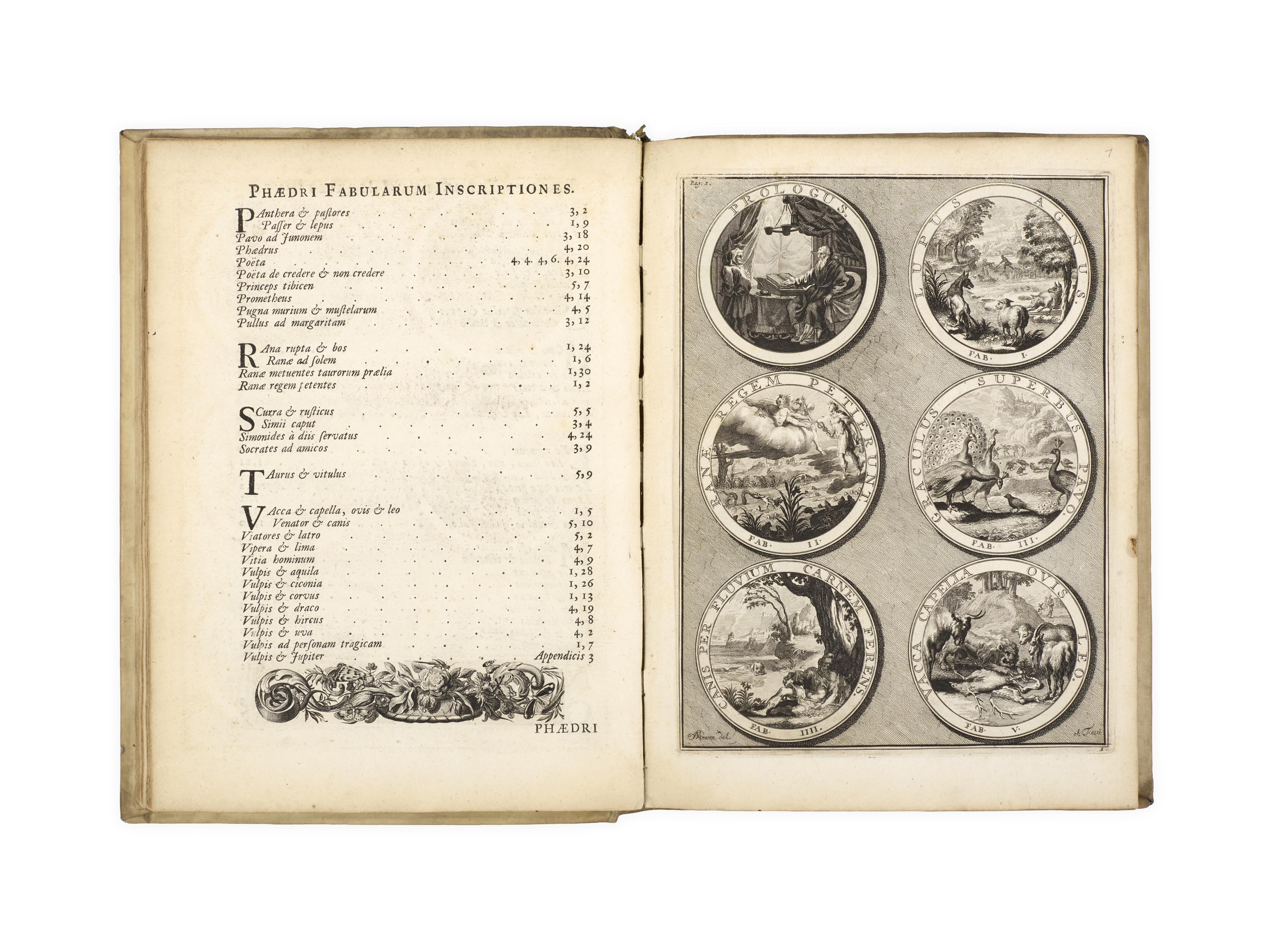
A Fabulous Fabulist
PHAEDRUS; David van HOOGSTRATEN, editor.
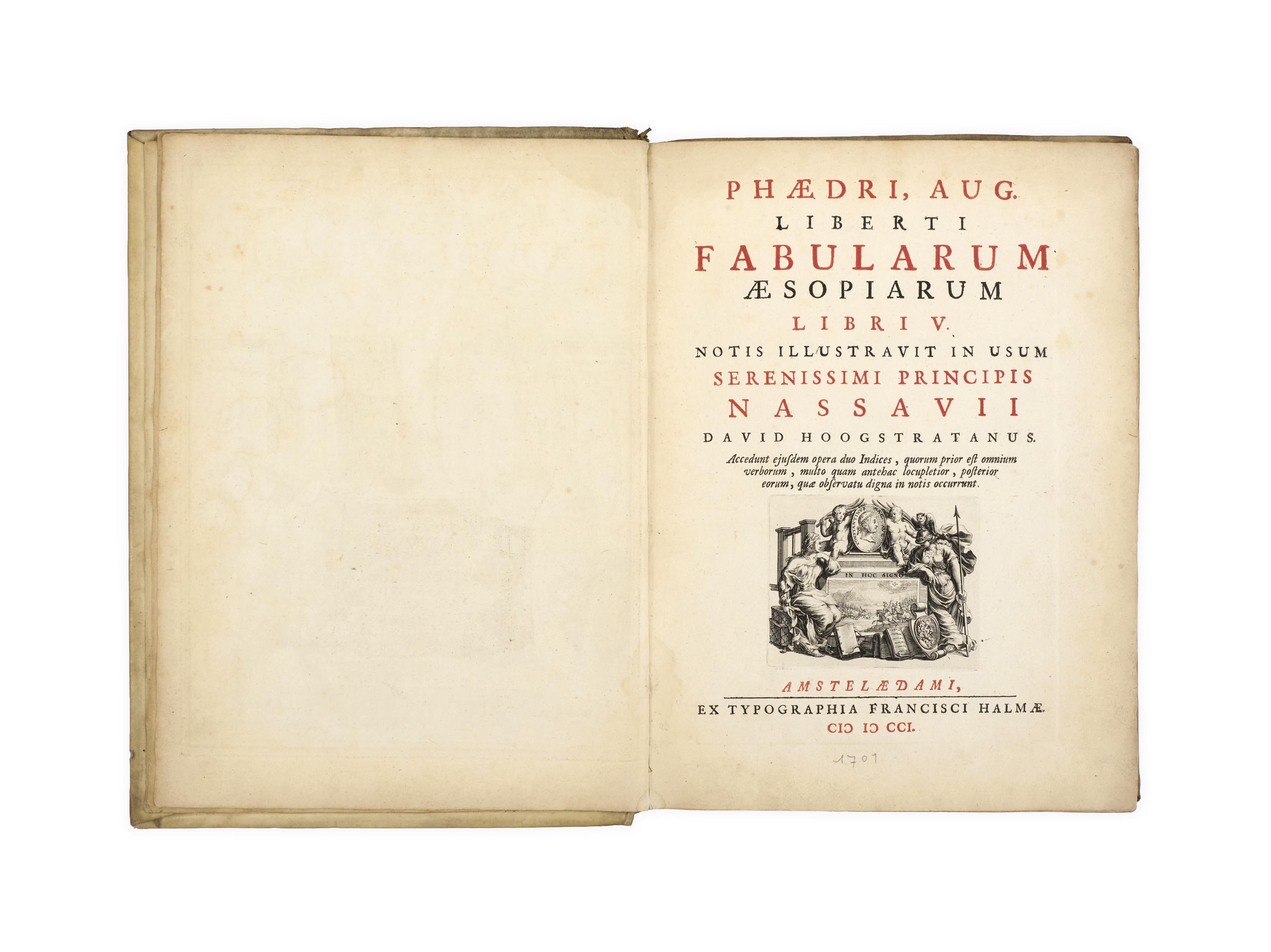
Fabularum Aesopiarum libri V … in usum Serenissimi Principis Nassavii … Amsterdam, François Halma, 1701.
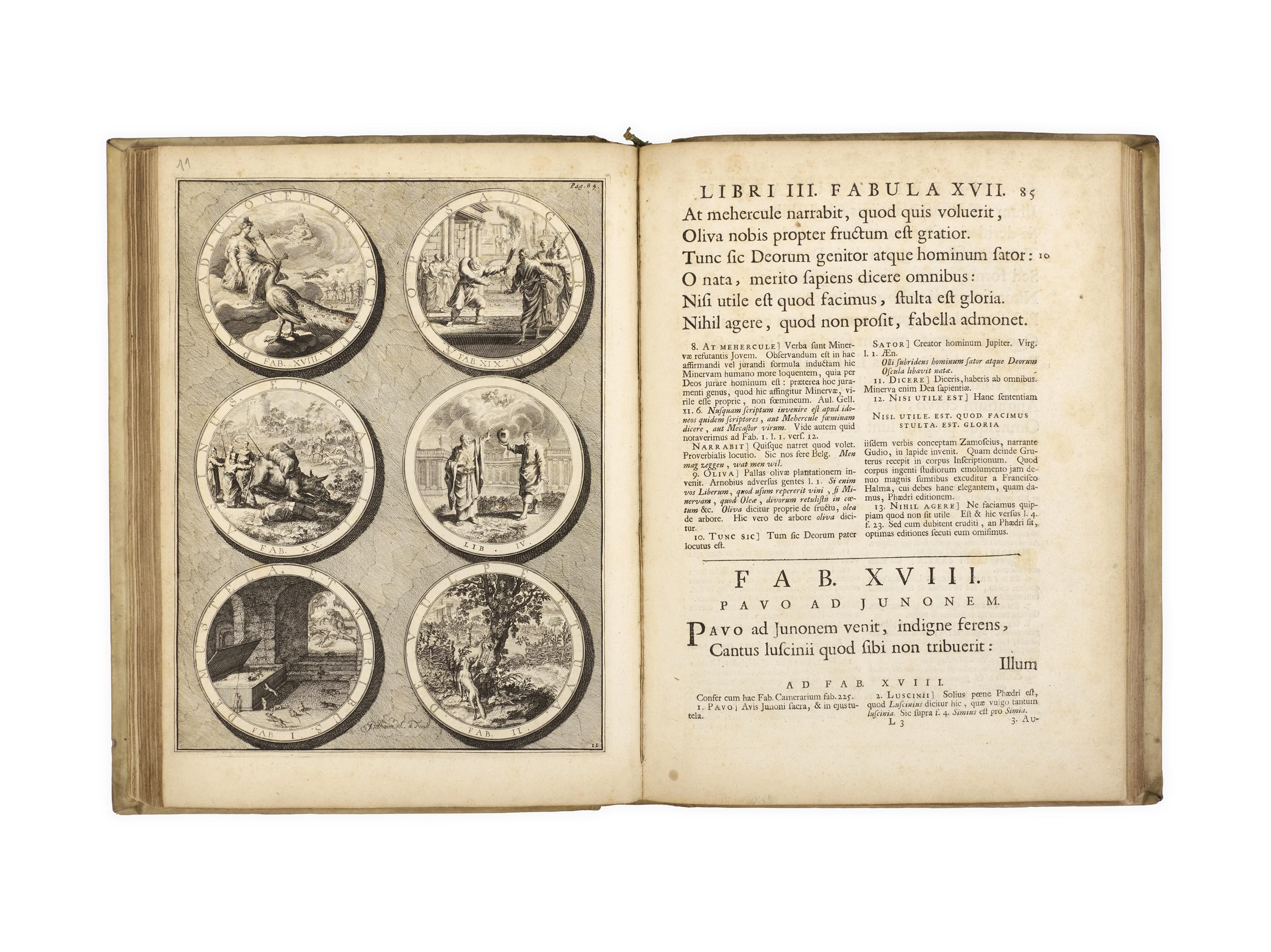
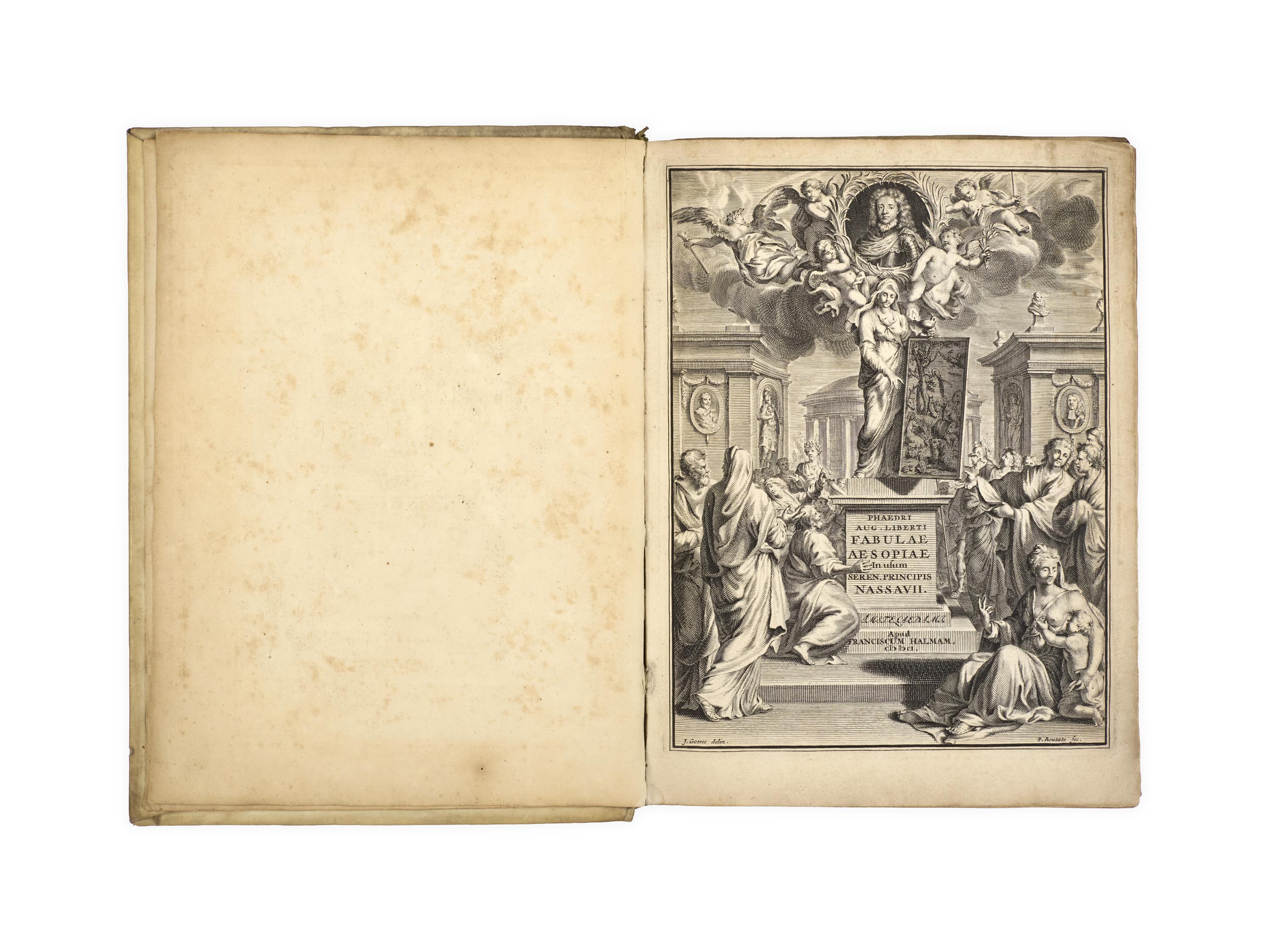
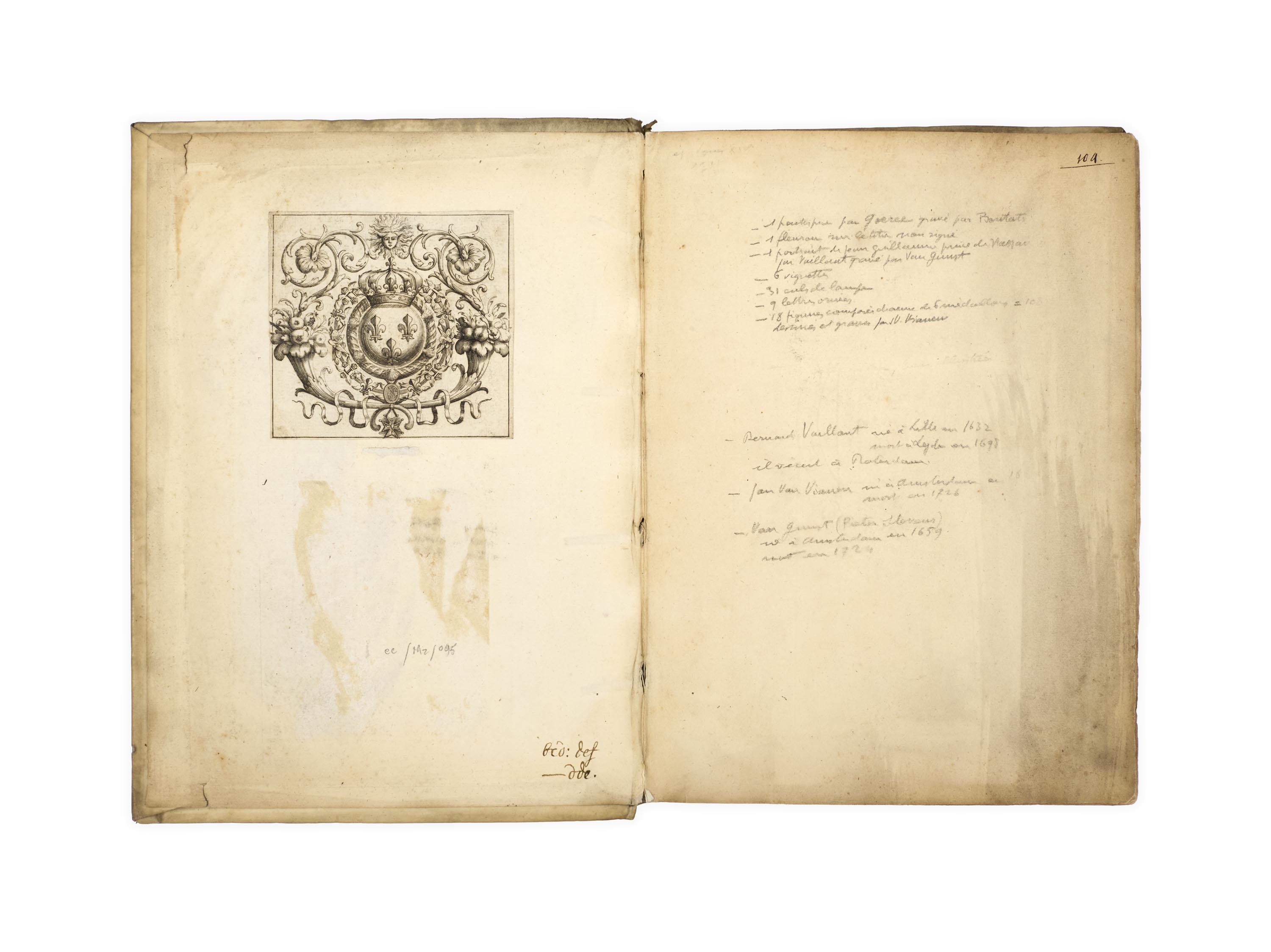
4to, pp. [xxxii], 160, [84], with large folding engraved portrait of the dedicatee by Pieter van Gunst after Bernard Vaillant and 18 engraved plates by Jan van Vianen (with six roundels per plate); engraved title by Boutats after Goeree printed to *1 (misdated 1601), title-page printed in red and black with engraved vignette, engraved initials, engraved head- and tailpieces; slight marginal dust-staining to engraved title, short repaired tear to inner fold of portrait, nonetheless a very good copy; bound in contemporary Dutch vellum over boards, later manuscript lettering to spine, edges speckled red; a few slight scuffs and stains, small excision to upper outer corner of rear free endpaper; eighteenth-century engraved armorial bookplate with the French royal arms to front pastedown and eighteenth-century manuscript price code ‘bcd: def | —dde'.
Added to your basket:
Fabularum Aesopiarum libri V … in usum Serenissimi Principis Nassavii …
A richly illustrated and handsomely printed edition of these fables in the style of Aesop with extensive notes and indices prepared by David van Hoogstraten for the use of the Prince of Nassau, ‘the most luxurious among the Dutch Phaedrus editions’ (Landwehr, p. 371).
Phaedrus called himself a Roman freedman from the time of the Emperors Augustus and Tiberius; he composed verse fables in the manner of Aesop, though sometimes adding a satirical and political edge. Recent studies have sought to emphasise his originality in his treatment of Aesop’s fables, bringing new light onto his creative endeavours; his verses not only feature the stereotypical animals familiar from Aesop (as well as Aesop himself), but also fables set in contemporary Rome. His attitude towards monarchical power is ambiguous, portraying animal kings negatively yet in the two fables that mention Augustus and Tiberius, the emperors are portrayed as perceptive. In one prologue Phaedrus expresses the idea that fables provided a way for the lowly to express themselves without censure or punishment; in another he emphasises their educational intent.
The editor, David van Hoogstraten (1659–1724), was a Dutch physician and philologist. As rector of the Latin school in Amsterdam, he produced numerous scholarly editions of classical texts, though the publication of this work led to an academic dispute with the Swiss Jean le Clerc over the value of vernacular poetry over Latin, known as the Poets’ War. It was first issued in 1699 in octavo format, unillustrated; this is the first illustrated edition, with numerous plates and decoration by the notable artist Jan van Vianen (c. 1660–c. 1726), dedicated to the teenaged Prince of Nassau.
STCN 184273005; Cohen-De Ricci 797; Lamb, Annales Phaedriani 1596–1996 (1998), 96; Landwehr, Emblem and fable books of the Low Countries F163.