An Illustrated Protectionist Fable – Newly Attributed
[STANFORD, John Frederick].
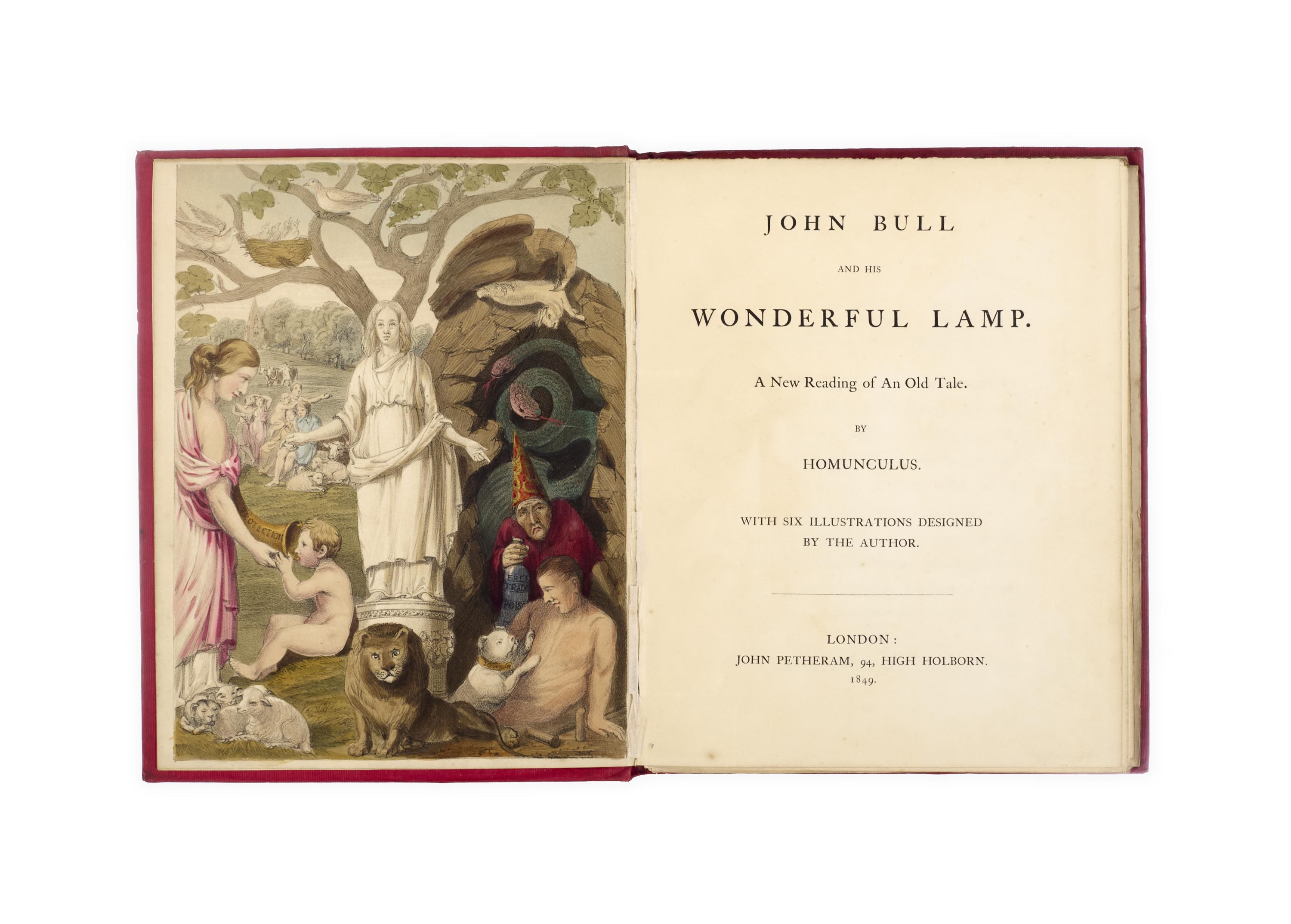
John Bull and his wonderful Lamp. A new Reading of an old Tale. By Homunculus. With six Illustrations by the Author. London, John Petherham, 1849.
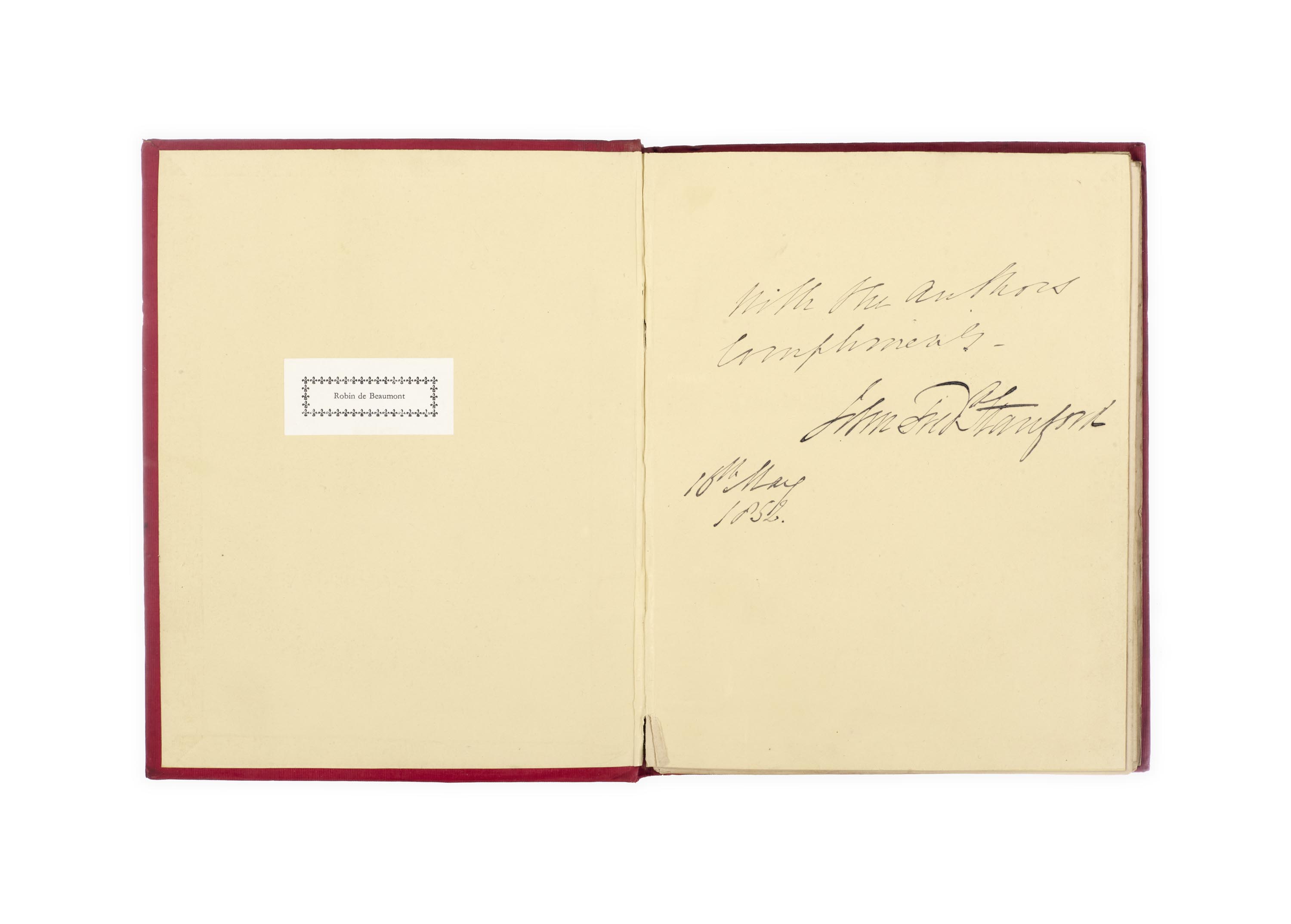
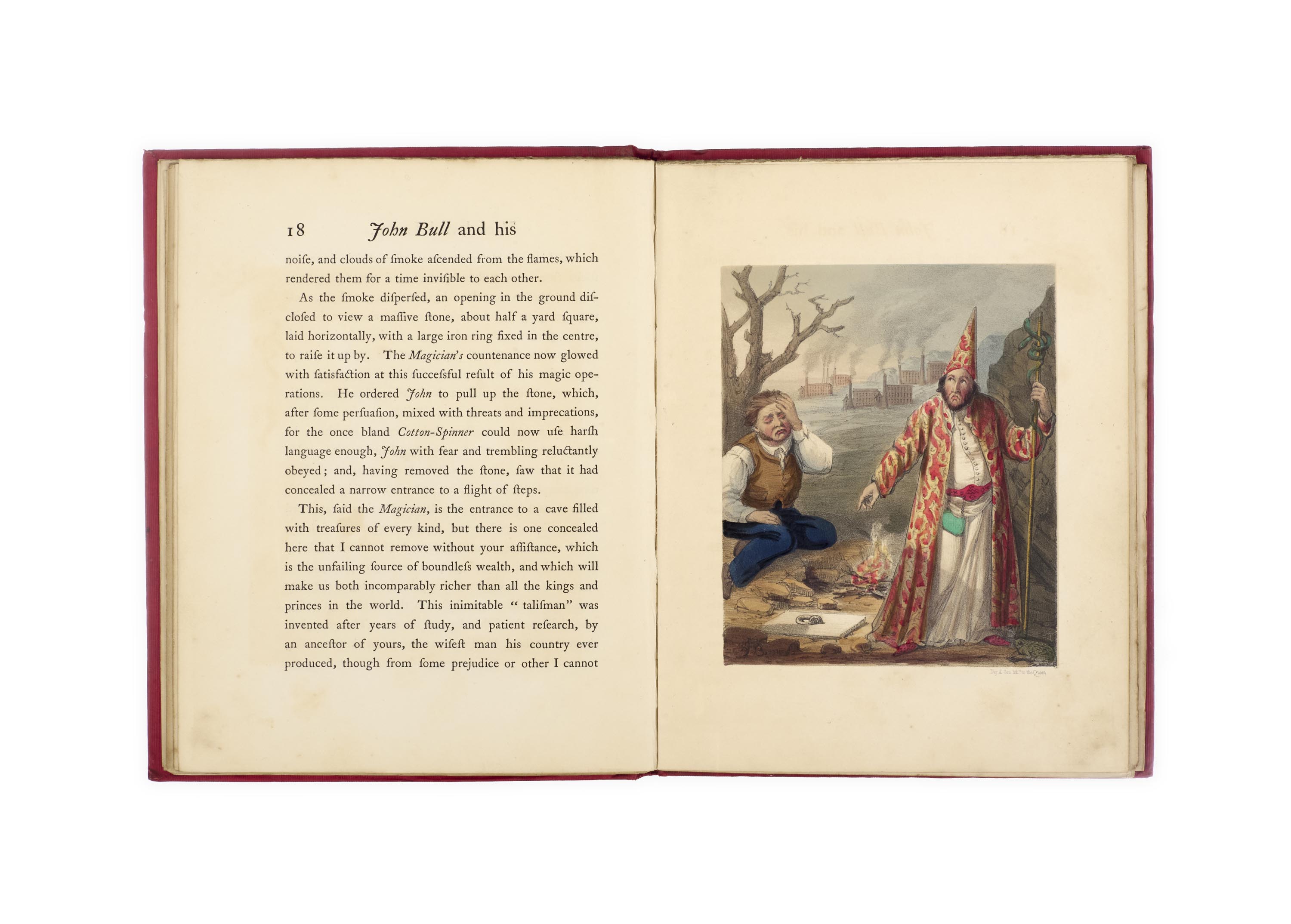
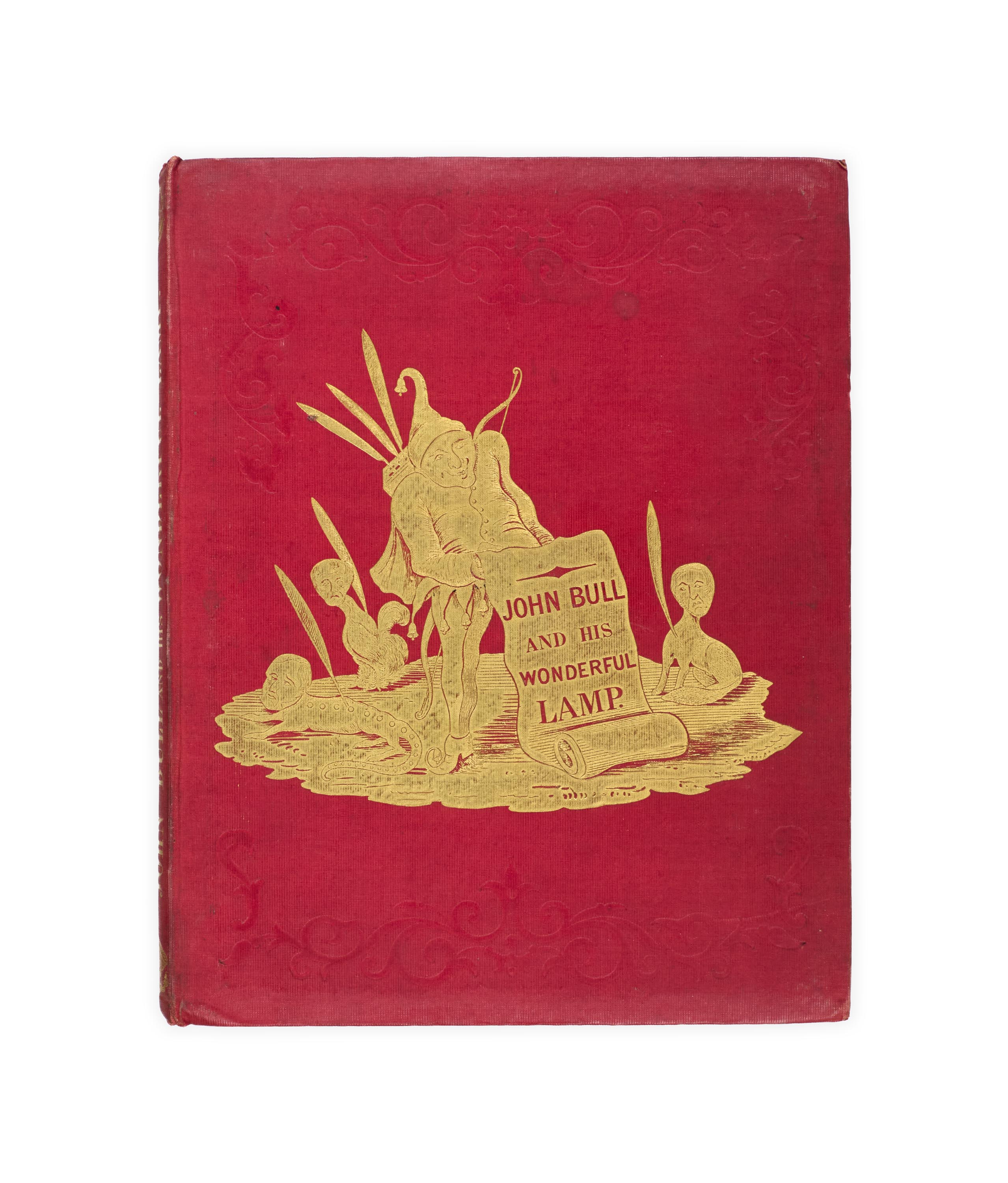
4to, pp. vi, 59, [1], with a half-title, a frontispiece and five other plates lithographed by Day & Sons after designs by the author, all hand-coloured, with tissue-guards; slightly shaken but a very good copy in the original red cloth, blocked in blind and gilt, with a large central image of a homunculus with quills and a large scroll; authorial presentation inscription to front free endpaper dated 16 May 1852; book-label of Robin de Beaumont.
Added to your basket:
John Bull and his wonderful Lamp. A new Reading of an old Tale. By Homunculus. With six Illustrations by the Author.
First edition, a rare hand-coloured presentation copy, inscribed ‘with the author’s compliments – John Frederick Stanford’, this inscription allowing a new attribution for a work previously anonymous, or attributed to Thackeray.
Ostensibly ‘designed to amuse “Little People” at merrie Christmas’ John Bull and his Wonderful Lamp was Stanford’s ‘first joint effort of his pen and pencil’ and is illustrated with six lively plates. It is a fable based on Aladdin in which John Bull and his mother Dame England are lured by the wily cotton-spinner ‘Co-Abdin’ (Richard Cobden) to the Land of Free Trade, a barren waste of belching chimneys where he hopes John Bull will break the spell of the Lamp of Native Protection. In the event John comes away with the Lamp itself and its Genie ensures for him a long period of prosperity (with investment in mines and coal) broken only when Robert Peel (‘El Peel’) and Lord John Russell (‘Roussoull Al Hassard’) fall for the ‘new lamps for old trick’ and swap it for the Lamp of Free Trade. John Bull manages to regain Native Protection only having obtained the formidable ‘weapon’ of Public Opinion.
Stanford (1815–1880) was an Irish-born barrister educated at Trinity and Christ’s Colleges, Cambridge, FRS, and MP for Reading 1849 to 1852. He published a number of short works on political economy, but it is not otherwise known as an artist. The publisher of the present work, John Petherham, also published Stanford’s On the Suppression of Medicancy in the Metropolis (1847).
Goldsmiths’ 36176.