Sweeping Sin From a Sinner’s Heart
[CAPIZZI, Ignazio.]
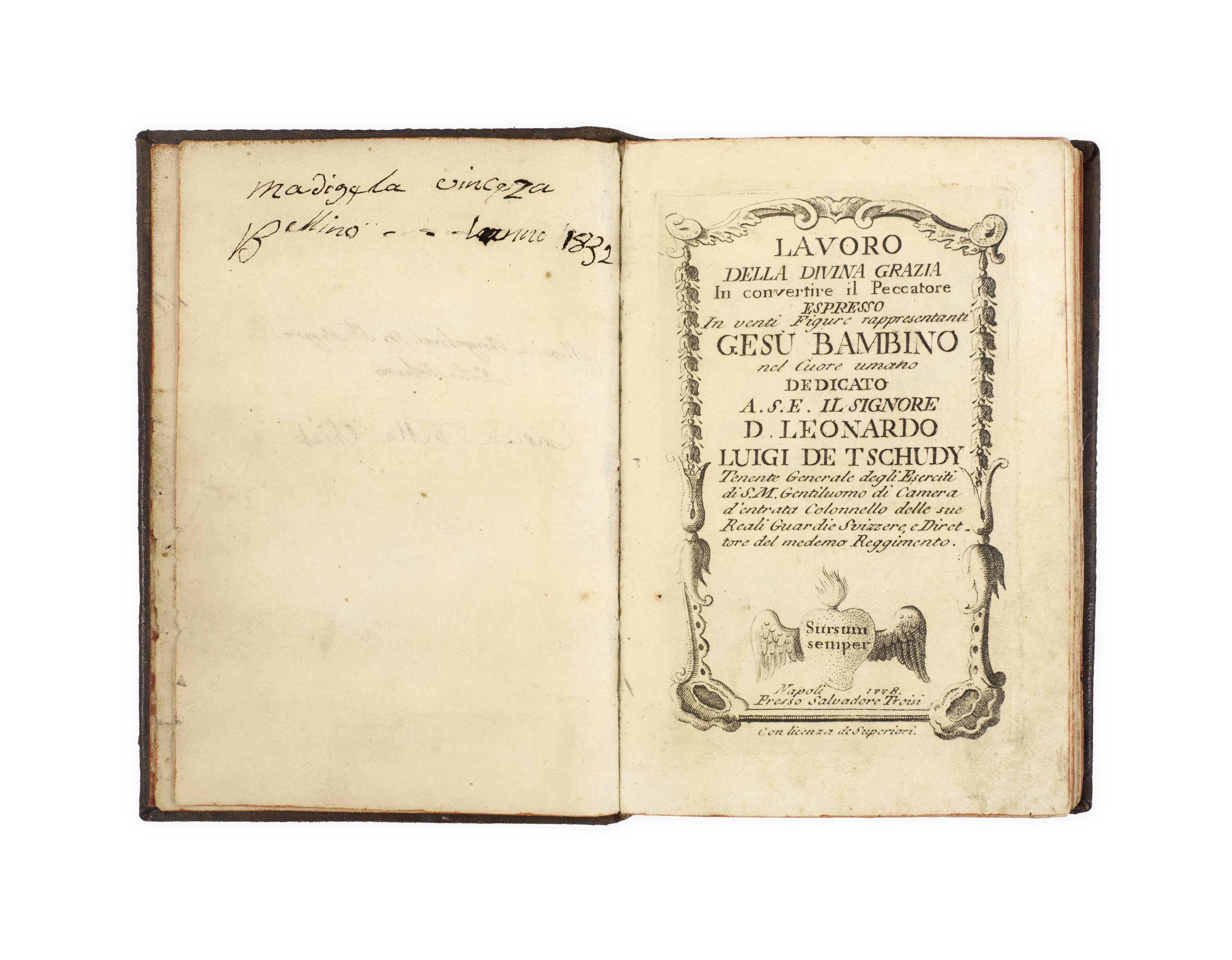
Lavoro della divina grazia in convertire il peccatore espresso in venti figure rappresentanti Gesu bambino nel cuore umano dedicato a S. E. il signore D. Leonardo Luigi de Tschudy ... Naples, Salvadore Troisi, 1778.
8vo, pp. xii, 179, [1 (blank)]; engraved title-page, engraved arms at head of p. iii, with 20 engraved plates (‘Strina inc.’), text within frame of type ornaments, woodcut initials, tailpieces; occasional small marks, slight marginal worming to last few leaves; a very good copy in contemporary sheep, spine gilt in compartments with remains of red morocco lettering-piece, red edges, block-printed red patterned paper pastedowns; rubbed, some worming to endpapers; early ownership inscriptions to front endpapers ‘Maria Angelica di St Pape Nata Solaro’, ‘Enrica Della Chiesa’, and ‘Madigela Vinceza Bellino l’anno 1832'.
Added to your basket:
Lavoro della divina grazia in convertire il peccatore espresso in venti figure rappresentanti Gesu bambino nel cuore umano dedicato a S. E. il signore D. Leonardo Luigi de Tschudy ...
Very rare edition of this emblematic work on the infant Jesus entering the heart of a sinner by the Venerable Ignazio Capizzi (1708–1783), illustrated with twenty plates by the Neapolitan engraver and prior Ferdinando Strina, this copy with three successive female owners.
Capizzi, dubbed ‘the Saint Philip Neri of Sicily’ by Pope Pius IX, was born in Bronte, near to Mount Etna. Having initially studied medicine, he turned to theology, becoming a priest in 1736. ‘He spent most of his priestly life in Palermo, dedicating himself to popular missions and educating boys in the ministry of the confessional, amidst difficulties and misunderstandings. From 1769, he lived in the Oratory of Olivella, where he demonstrated, in addition to his already well-known zeal, his outstanding talents as a theologian and writer’ (oratoriosanfilippo.org). His Lavoro della divina grazia was first published in Palermo in 1775.
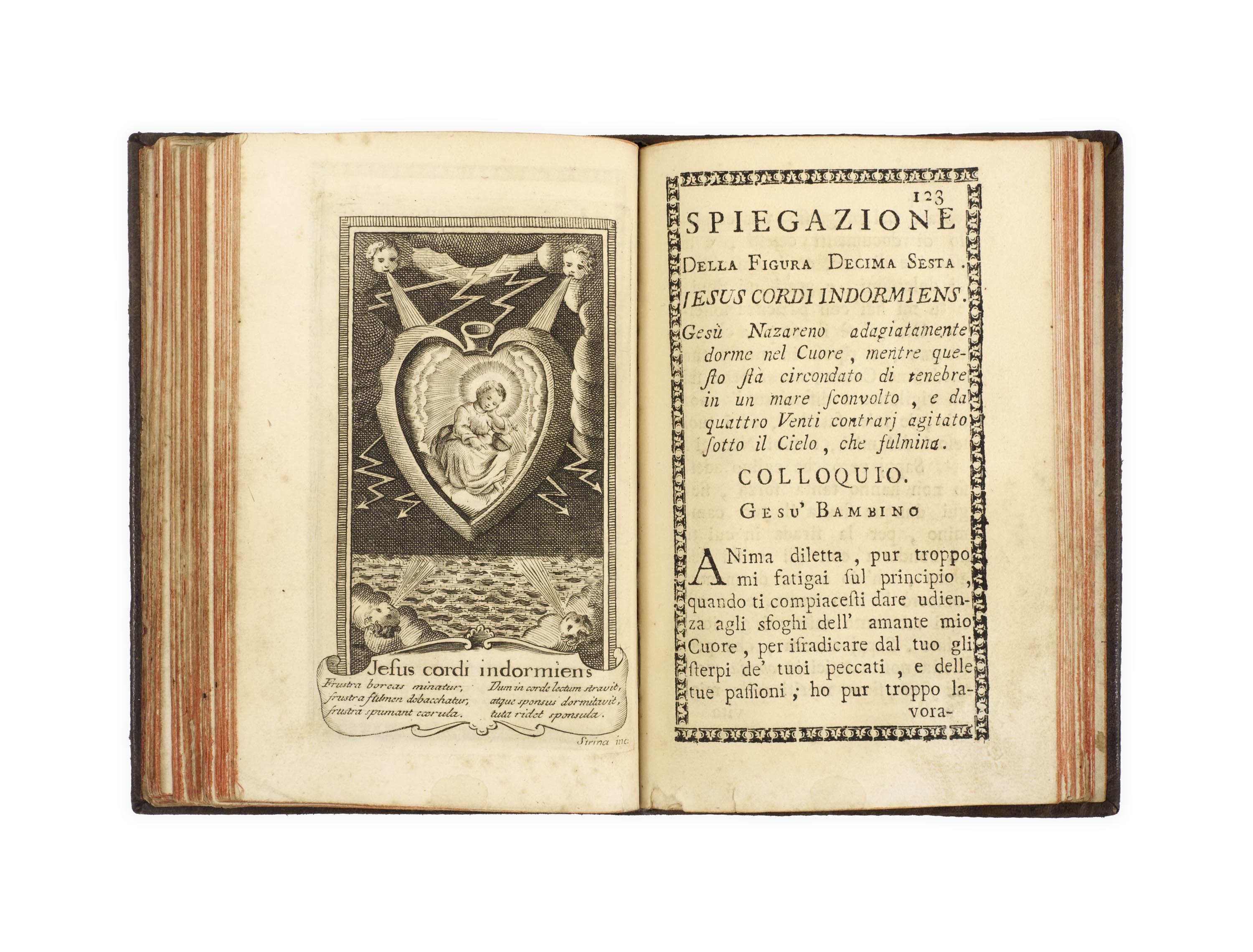
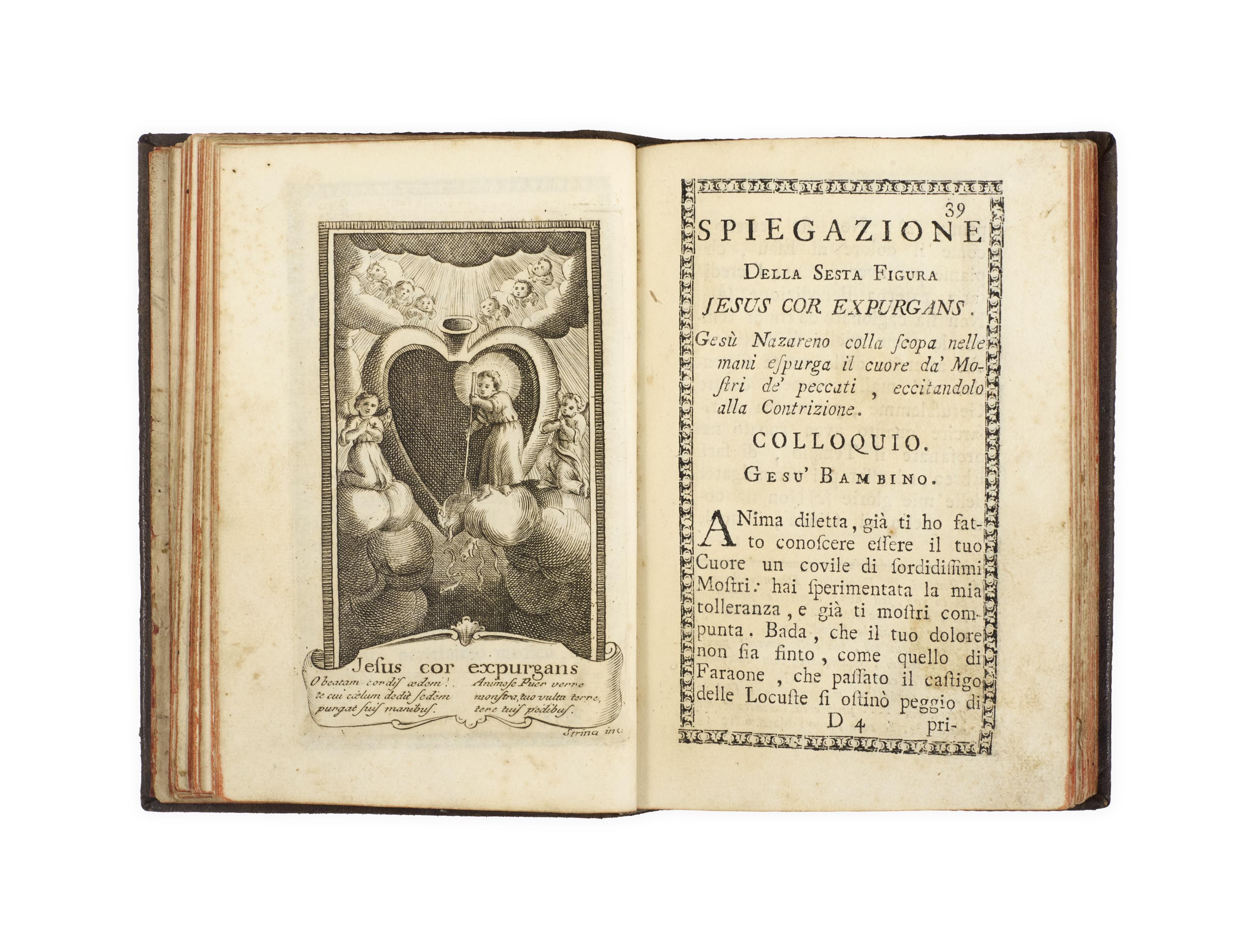
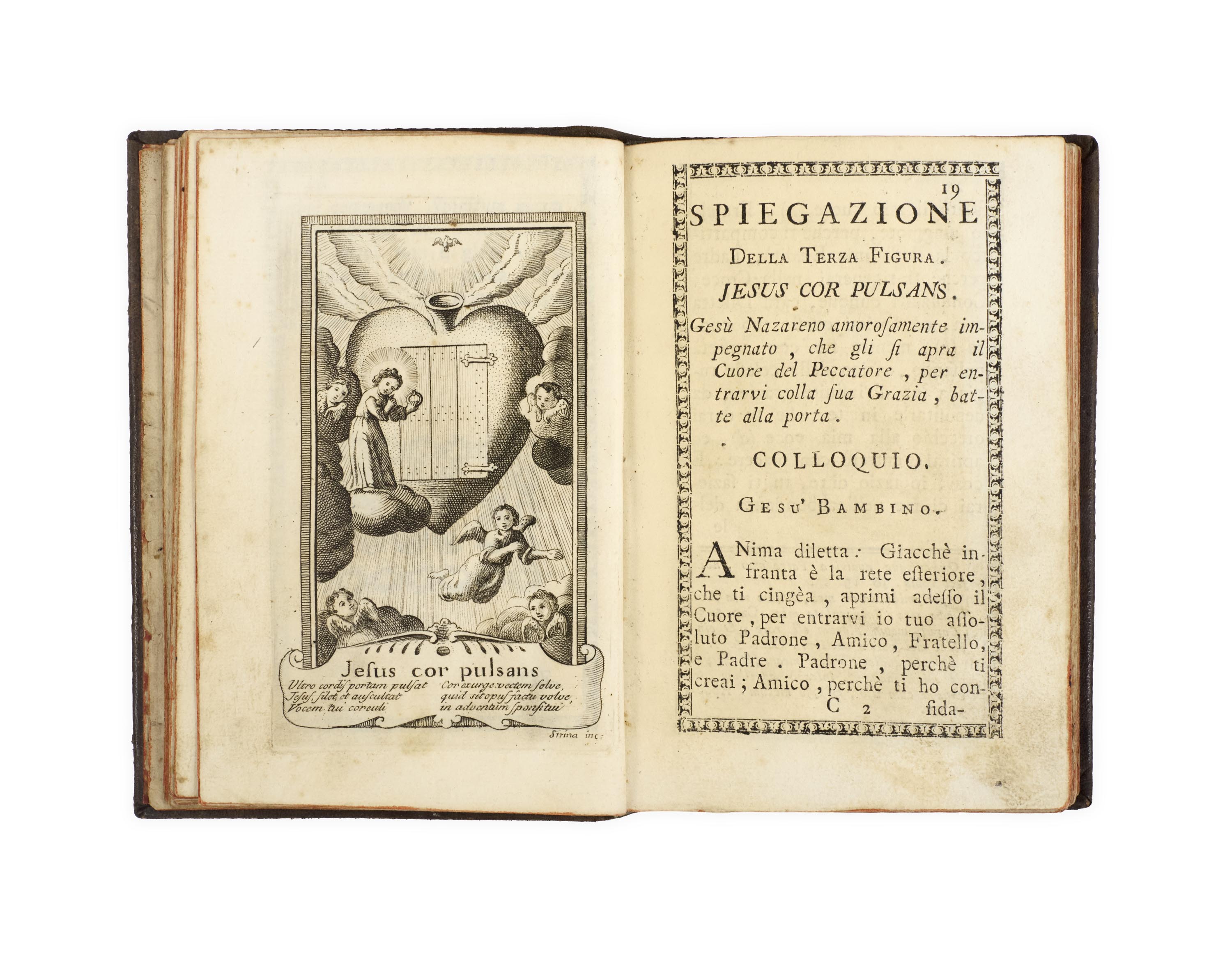
The twenty emblematic plates, with captions in Latin, are adapted from those in the Palermo edition and are much finer in execution. Each receives an explanation in the text, followed by a colloquio and affetti dell’anima. They depict, inter alia, the infant Christ knocking at the door of the heart of a sinner; entering with a lamp to examine the sinner’s conscience; sweeping out sin with a broom; bringing in the instruments of the Passion to fortify the soul; painting, with brush and palette, the Four Last Things; teaching, from a book, the Eight Beatitudes; sleeping peacefully while the heart is assailed by darkness, rough seas, winds, and lightning; and singing from a book accompanied by angelic musicians.
No copies traced in the UK or US. OPAC SBN records only two copies in Italy.